How Color Works
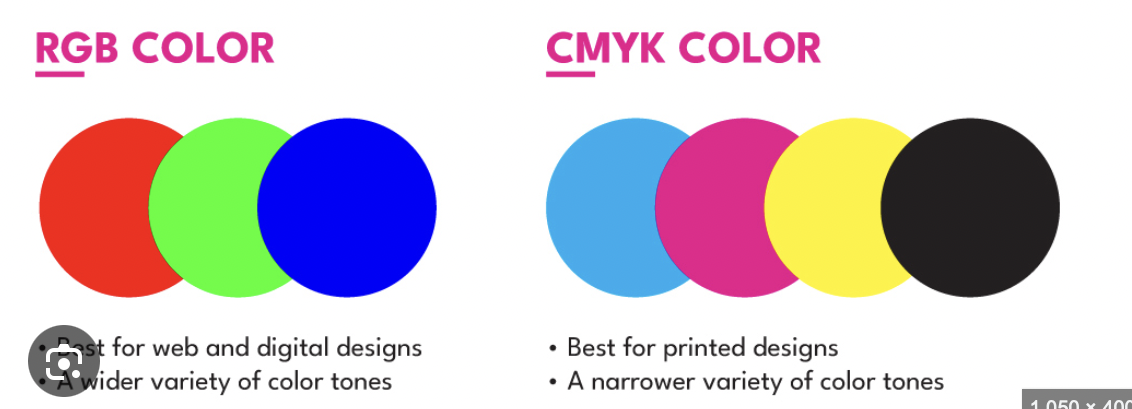
Reflected color and projected color represent two distinct ways that color is perceived, each involving different methods of producing and experiencing color.
Reflected Color (Ink):
Reflected color is the result of light reflecting off a surface, such as paper or an object. This color is created using pigments or dyes, like those found in ink, paint, or colored materials. The surface absorbs certain wavelengths of light and reflects others, which is what our eyes perceive.
Example:
- Printed Material: When you print a colorful image using ink, the paper absorbs certain colors and reflects others. For instance, if a print contains cyan, magenta, yellow, and black (the CMYK color model), these inks combine in various ways to reflect specific wavelengths of light, creating the colors we see.
Projected Color (Screen):
Projected color, on the other hand, comes from light being emitted directly from a source, like a screen on a computer or smartphone. Screens use light from pixels that emit red, green, and blue (RGB) light. By combining these three colors at different intensities, screens can produce a wide range of colors.
Example:
- Digital Display: When you view an image on your phone, the screen’s pixels emit light in red, green, and blue. For example, to create white, all three colors are combined at full intensity. If you want to create purple, the screen would emit red and blue light while minimizing green.
Understanding the difference between reflected and projected color helps in various fields, from art and design to photography and screen technology. This distinction also influences how we perceive and create colors in different media.
How do we see color on a screen?
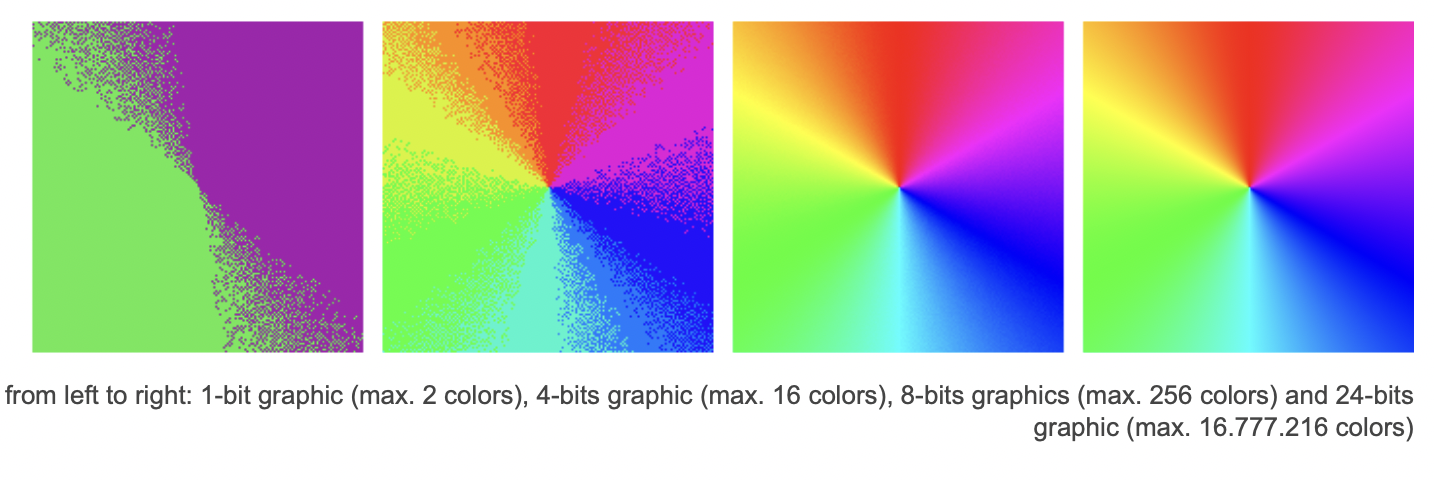
Bits in relation to color on a digital screen refer to the amount of data used to represent each color channel (usually red, green, and blue). For example, in an 8-bit color system, each channel can display 256 different shades (2^8), resulting in over 16 million possible colors when combined. More bits allow for a wider range of colors and finer gradients. As seen in the image above, you can clearly see the difference between a 1-bit graphic, and the (max) 256 bit graphic.